Swing Trading Guide: Master the Markets in 2026

On this page
Ready to capture bigger profits in 2026? Swing trading could be your edge in fast-moving markets. This comprehensive guide will empower you to master swing trading, using proven strategies and the latest tools to thrive in the dynamic market landscape ahead.
Swing trading is gaining popularity among both new and experienced traders, thanks to its flexibility and strong profit potential in volatile conditions. Imagine having the freedom to trade around your schedule while capitalizing on powerful market swings.
In this article, you will discover actionable strategies, expert insights, and up-to-date tactics designed for success in 2026. Follow our step-by-step blueprint to build your skills, boost your confidence, and grow your profitability.
You will learn about swing trading fundamentals, winning strategies, technical analysis tools, risk management, market selection, advanced tips, and essential resources, all designed to help you master the markets in the year ahead.
Understanding Swing Trading: Core Concepts and Market Dynamics
Swing trading has become a go-to approach for traders seeking to profit from price moves that unfold over days or weeks. This accessible style bridges the gap between fast-paced day trading and patient long-term investing, appealing to both new and experienced market participants.

What is Swing Trading?
Swing trading is a medium-term trading style where participants aim to capture gains from short- to intermediate-term price swings. Trades are typically held for several days to a few weeks, allowing traders to benefit from meaningful moves without needing to monitor the market every minute.
Unlike strategies that chase every tick, swing trading focuses on capturing a portion of a trend. For instance, a trader might buy a stock after a technical breakout and sell once it rises by 10 percent. Both technical and fundamental analysis play a role in decision-making. According to Saxo Bank, swing trading ranks among the most popular styles for retail traders. This approach fills the space between the rapid pace of day trading and the patience required for investing.
How Swing Trading Differs from Day Trading and Investing
Understanding the distinctions between swing trading, day trading, and investing helps traders choose the best fit for their lifestyle and goals. The table below summarizes key differences:
Aspect | Day Trading | Swing Trading | Investing |
|---|---|---|---|
Holding Time | Intraday (minutes-hours) | Multi-day/weeks | Months to years |
Trade Frequency | High | Moderate | Low |
Margin/Leverage | Up to 4:1 (Saxo Bank) | Typically 2:1 | Varies |
Time Commitment | Full-time | Part-time/flexible | Minimal |
Psychological Demands | Intense | Moderate | Low |
Swing trading stands out for its flexible approach. Unlike day trading, swing traders can maintain a full-time job, as trades do not require constant monitoring. The risk and reward profiles also differ, making swing trading suitable for those seeking balance between activity and patience.
The 2026 Market Landscape: Opportunities and Challenges
As we approach 2026, swing trading continues to evolve. Markets are experiencing heightened volatility, with algorithmic trading and global events driving sharper price swings. The rise of AI and automation means that retail traders now have access to advanced tools once reserved for professionals.
Trading platforms have become more accessible, making it easier to participate. The surge in retail trading activity seen after 2020 has persisted. However, challenges remain. According to Saxo Bank, over 60 percent of retail accounts lose money in leveraged products. Success in this environment requires adaptability and the smart use of technology. For a deeper look at how strategies are changing with new technology and predictive analytics, see Swing Trading Strategies in 2026.
Essential Mindset and Skills for Swing Traders
To thrive with swing trading, traders need more than just technical knowledge. Discipline and patience are vital for waiting for optimal setups. Reading technical signals objectively helps remove emotional bias from decisions.
Emotional control is essential to handle both wins and losses gracefully. Continuous learning and a willingness to adapt to new market conditions keep traders ahead. For example, avoiding overtrading during sideways markets is a sign of strong discipline. Ultimately, the right mindset is as crucial as any technical skill for long-term swing trading profitability.
Common Mistakes to Avoid in Swing Trading
Even skilled traders can fall into common traps. Some to watch out for:
-
Chasing trades without proper risk management
-
Relying solely on one indicator or strategy
-
Ignoring broader market news or macroeconomic events
-
Holding positions through earnings or major news without a plan
A classic example is holding a trade through an earnings report without preparation, exposing the position to unexpected gaps. Systematic errors like these can quickly erode any gains achieved through swing trading.
Step-by-Step: Building a Profitable Swing Trading Strategy
Building a profitable swing trading strategy is a systematic process that blends planning, analysis, and discipline. Each step is essential to help traders navigate volatile markets and capture consistent gains. Let us break down the blueprint into six actionable steps.

Step 1: Define Your Trading Plan and Objectives
Every successful swing trading journey starts with a clear plan. Set specific financial goals, such as monthly profit targets or annual growth rates. Decide which markets and timeframes align with your lifestyle and risk appetite.
Determine your rules for trade sizing, entries, and exits. For example, many swing trading professionals risk no more than 1% of their account per trade. Documenting your plan in writing increases accountability and helps you stay disciplined during market swings.
A well-defined plan serves as your roadmap, guiding you through both winning streaks and inevitable setbacks. Consistent review and refinement ensure your swing trading approach remains aligned with your evolving objectives.
Step 2: Master Technical Analysis for Swing Trading
Technical analysis forms the backbone of effective swing trading. Focus on reading price action, recognizing chart patterns like breakouts, reversals, flags, and pennants. Identify key support and resistance levels to time your entries and exits.
Use candlestick patterns, such as bullish engulfing or hammer formations, to confirm your setup. Technical analysis helps swing trading practitioners spot changes in trend direction and filter out market noise.
Mastering these skills requires ongoing practice. Over time, you will develop the confidence to act decisively when the right opportunity arises. Remember, objective analysis beats gut feelings in swing trading.
Step 3: Utilize Proven Technical Indicators
Swing trading strategies often rely on a set of trusted technical indicators. Moving Averages (MA) help reveal trend direction and potential crossovers. The Relative Strength Index (RSI) highlights overbought or oversold conditions, while the Stochastic Oscillator detects momentum shifts.
A common example is watching for the 50-day MA crossing above the 100-day MA, signaling a possible trend change. RSI readings above 70 indicate overbought markets, and those below 30 suggest oversold conditions.
Combining indicators with price action provides deeper insights. Swing trading becomes more precise when you use these tools to validate your decisions and avoid false signals.
Step 4: Select High-Probability Trade Setups
Quality outweighs quantity in swing trading. Focus on high-probability setups such as breakouts with volume confirmation, trend-following entries, or pullbacks to strong support levels.
Breakout trading involves entering after price clears a key level with convincing volume. Trend-following lets you capture a portion of a sustained move, while pullback trading offers attractive risk-reward by buying dips in uptrends.
For more guidance on identifying robust patterns, explore these High-Probability Trading Setups. Consistent swing trading performance hinges on patience, discipline, and a clear set of criteria for every trade.
Step 5: Manage Risk Like a Pro
Risk management is the cornerstone of long-term swing trading success. Always set stop-loss and take-profit levels before entering a position. Calculate your position size based on a fixed risk percentage, typically 1-2% of your account.
Consider using trailing stops to lock in profits as trades move in your favor. Be cautious around major news releases or holding trades overnight, since gaps can lead to unexpected losses.
Leverage can amplify results but also magnifies risk. By keeping losses small and sticking to your rules, you preserve capital and maintain the ability to capitalize on future swing trading opportunities.
Step 6: Review, Refine, and Adapt Your Strategy
Continuous improvement is essential in swing trading. Keep a detailed trading journal to document entries, exits, and the rationale behind each trade. Regularly analyze your results to identify patterns in both your successes and mistakes.
Adapt your strategy to reflect changes in market volatility or after a series of losses. For example, you might adjust your stop placement or tighten your entry criteria. This process keeps your swing trading approach agile and resilient.
Remember, the best traders treat every trade as a learning experience. By refining your methods and staying open to new ideas, you build a foundation for long-term profitability in swing trading.
Essential Tools and Resources for Swing Traders
To excel in swing trading, traders need a powerful toolkit designed for speed, accuracy, and informed decision-making. The right resources can save hours of research, boost trade consistency, and give you a competitive edge. Let us explore the essential tools every swing trading practitioner should have in 2026.
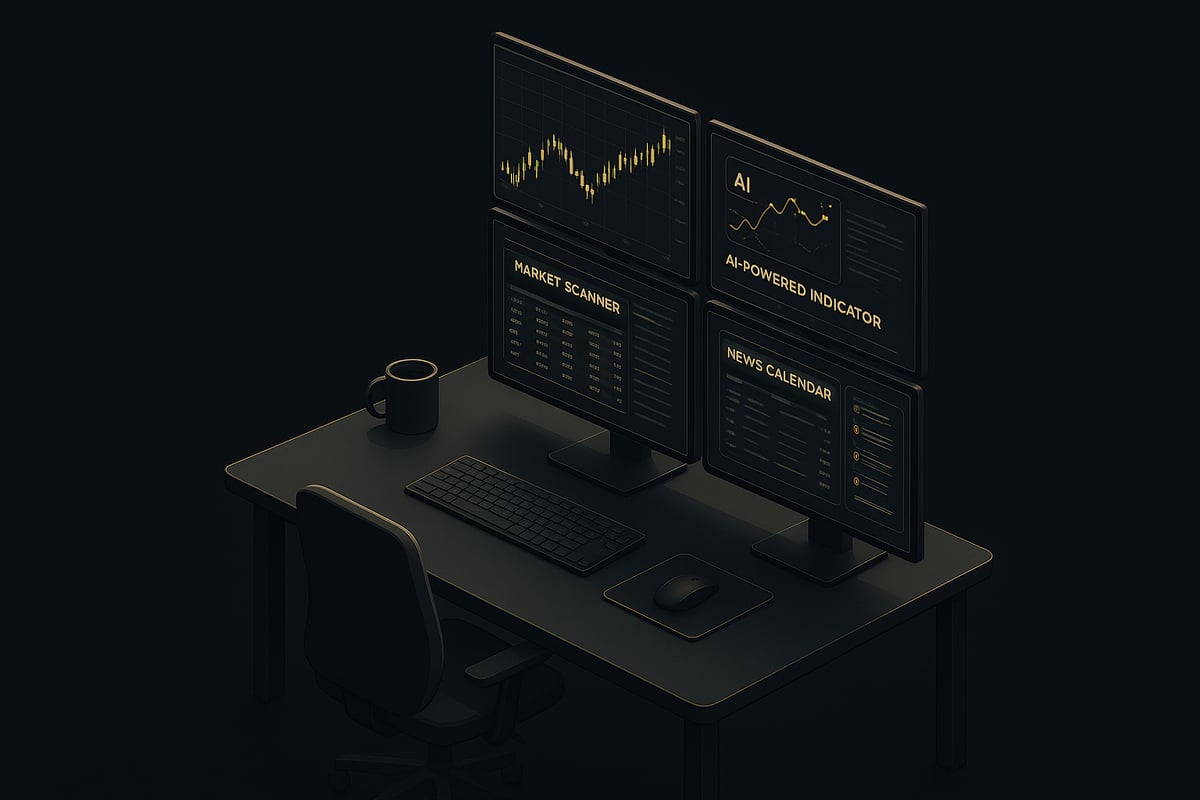
Charting Platforms and Market Scanners
Charting platforms are the foundation of swing trading analysis. They provide real-time access to price movements, technical indicators, and drawing tools for mapping out strategies. Leading platforms like TradingView, MetaTrader, and Thinkorswim allow traders to view multiple timeframes, set up alerts, and customize chart layouts for their preferred swing trading setups.
Efficient market scanners are equally important. These tools help traders identify high-probability swing trading opportunities by filtering assets based on volume, volatility, and pattern recognition. For example, a scanner can highlight stocks breaking resistance or forex pairs showing strong momentum.
When selecting a platform, prioritize features such as multi-timeframe support, an extensive indicator library, and seamless integration with news feeds. These capabilities streamline the swing trading workflow, enabling faster and more confident decisions.
Adaptive Trading Indicators: Enhancing Edge and Accuracy
adaptive trading indicators are transforming the swing trading landscape. By leveraging machine learning, these tools analyze vast datasets in real time, uncovering patterns and signals that traditional methods may miss. They remove emotional biases, increase consistency, and help traders react swiftly to market changes.
For example, AI indicators can scan multiple assets and timeframes, delivering instant alerts when a swing trading setup emerges. Many traders report improved win rates and reduced analysis paralysis when integrating AI into their strategies.
To explore how AI tools can enhance your swing trading approach, consider reviewing Adaptive Trading Indicators for deeper insights and practical applications. Embracing AI is quickly becoming essential for traders seeking a sustainable edge.
PipTrend: Adaptive Trading Indicator for Swing Traders
PipTrend stands out as an AI-driven solution tailored for swing trading across forex, crypto, stocks, and indices. It delivers real-time buy and sell signals, utilizing multi-timeframe analysis to increase precision. Customizable alerts and instant mobile notifications help traders stay on top of every opportunity with minimal screen time.
Seamless integration with TradingView ensures an intuitive charting experience. Swing trading practitioners benefit from fewer missed trades, reduced decision fatigue, and improved consistency. PipTrend is trusted by more than 100 customers and over 20 brands worldwide.
The platform offers a free three-day trial and lifetime updates, making it a practical choice for those serious about swing trading success in 2026.
News and Economic Calendar Tools
Staying informed of market-moving news is critical for swing trading. Economic releases, earnings reports, and geopolitical events can trigger significant price swings. Tools such as Forex Factory, Investing.com, and Bloomberg Terminal provide real-time updates and customizable economic calendars.
For example, savvy swing trading professionals avoid opening new positions before major central bank announcements or earnings calls. Missing such information can lead to costly gaps or unexpected volatility.
Integrating news and calendar tools into your routine helps prevent surprises and supports smarter trade timing, a key advantage in swing trading.
Trading Communities and Educational Resources
Active participation in trading communities accelerates swing trading mastery. Forums, Discord groups, webinars, and online courses offer valuable peer support, mentorship, and strategy sharing. Engaging with experienced traders can spark new ideas and foster accountability.
Educational resources are equally vital. Books, blogs, and video lessons keep you updated on evolving swing trading techniques and market trends. Studies show that traders who collaborate and continue learning report higher confidence and faster progress.
By leveraging these communities and resources, swing trading enthusiasts can sharpen their skills, remain motivated, and adapt to the dynamic markets of 2026.
Top Swing Trading Strategies for 2026: Tactics That Work
Unlocking consistent results in swing trading requires a toolkit of proven strategies, each tailored to different market conditions. Let us explore the top tactics for 2026, offering actionable steps, real-world examples, and expert tips to help you navigate volatility and capture profits.

Breakout Trading: Capturing Explosive Moves
Breakout trading is a cornerstone of swing trading, ideal for catching strong price surges after consolidation periods. Traders scan for price ranges where assets move sideways, then enter positions when price breaks above resistance or below support.
-
Confirm breakouts with a surge in trading volume.
-
Place stop-loss just inside the range to manage risk.
-
Set clear targets based on the range’s size.
For example, a swing trading setup might involve entering a stock above a resistance level, confirmed by high volume, and aiming for a 2:1 reward-to-risk ratio. Breakout strategies remain a favorite among swing trading practitioners for their ability to capture swift, high-momentum moves.
Trend Following: Riding the Market’s Momentum
Trend following is about aligning with the market’s direction and letting your winners run. This swing trading tactic leverages moving averages and price action to identify established trends and enter trades on pullbacks or after a trend confirmation.
-
Use moving averages like the 50-day and 100-day for trend direction.
-
Enter on pullbacks to support in an uptrend or resistance in a downtrend.
-
Trail stops to lock in profits as trends develop.
A swing trading example could be buying a technology stock during a clear uptrend, then holding for a 15% move while trailing the stop to maximize gains. With proper risk control, trend following can be highly rewarding.
Pullback and Retracement Strategies
Pullback strategies are designed to capitalize on temporary reversals within a prevailing trend. Swing trading practitioners wait for the price to retrace to key support or resistance levels, then enter with confirmation signals for the next leg of the trend.
-
Identify the main trend using higher timeframes.
-
Look for pullbacks to moving averages, Fibonacci levels, or prior support/resistance.
-
Confirm with bullish or bearish candlestick patterns.
For instance, a swing trading trade might involve buying a stock as it pulls back to the 20-day moving average in a strong uptrend, using a bullish engulfing candle as the entry signal. Pullback entries often offer improved risk-to-reward ratios.
Mean Reversion and Range Trading
In range-bound markets, mean reversion and range trading strategies shine. Swing trading here involves identifying when prices become overextended from their average and betting on a reversal back toward the mean.
-
Spot overbought/oversold conditions with RSI or Stochastic Oscillator.
-
Trade reversals at the upper or lower boundaries of established price channels.
-
Use tight stops to contain risk.
A swing trading scenario could involve shorting a stock at the top of a sideways range when RSI signals overbought, targeting a return to the range’s midpoint. These tactics excel in low-volatility environments.
Multi-Timeframe Analysis for Swing Trades
Multi-timeframe analysis elevates swing trading accuracy by aligning signals across daily, 4-hour, and weekly charts. This approach filters out noise and boosts the probability of success.
-
Confirm the broader trend on higher timeframes.
-
Only take trades that agree across multiple charts.
-
Avoid setups that conflict with the primary trend.
For advanced tactics and practical tips, explore Multi-Timeframe Analysis Techniques, which deepen your understanding of this essential swing trading method. By synchronizing entries with the dominant trend, traders reduce false signals and boost consistency.
Case Study: Real-World Swing Trade Example
Consider a recent swing trading example: A trader spots a breakout in a technology stock on the daily chart, confirmed by a spike in volume and an adaptive indicator. They enter above resistance, set a stop-loss just below the breakout point, and target the next resistance level.
The trade progresses as planned, with the stock rallying over the next week. The trader trails the stop to lock in gains, finally exiting as momentum wanes at the target zone. This swing trading case highlights the practical application of the strategies discussed above and underscores the importance of discipline and planning.
Risk Management and Psychology: Protecting Your Capital and Mindset
Mastering risk management is the backbone of swing trading success. Without capital preservation, even the best trade setups can lead to ruin. Consistently applying sound risk practices ensures your longevity in the market and builds confidence over time.
The Importance of Risk Management in Swing Trading
In swing trading, preserving capital is non-negotiable. Every trader faces losing streaks, but those who manage risk can withstand setbacks. Setting stop-loss orders before entering trades is essential. Never risk more than a small percentage of your account, such as 2% per trade.
Calculating position size based on your risk tolerance keeps emotions in check. For instance, if your account is $10,000, risking 2% means a maximum loss of $200 per trade. This discipline allows you to recover from losses and keep trading another day.
Poor risk management is the primary reason many swing trading accounts do not survive. By focusing on process over profit, you create a sustainable path to long-term success.
Handling Overnight and Weekend Risk
Unlike day trading, swing trading often involves holding positions overnight or through weekends. This exposes you to price gaps caused by unexpected news or economic events. A stock might close at one price, then open much lower the next day due to earnings or global developments.
To mitigate these risks, consider reducing position size before major announcements or using options to hedge. Avoid entering new trades right before earnings or significant news releases. Being proactive can save you from large, unexpected losses.
For a detailed breakdown of these unique risks and how to address them, see Risks of Swing Trading. Staying aware of overnight exposure is crucial for consistent swing trading performance.
Managing Emotions: Discipline, Patience, and Consistency
Swing trading demands emotional resilience. Fear of missing out, greed, and frustration can lead to impulsive decisions. The best traders follow their plans, even when tempted to deviate after a loss or a big win.
Journaling your trades helps identify emotional triggers and maintain discipline. Practicing mindfulness can reduce stress and keep you focused on process, not outcome. If a valid setup does not appear, wait, patience is your edge in swing trading.
Consistency in your approach, regardless of market noise, separates professionals from amateurs. Control your reactions, and your trading results will improve.
Learning from Losses and Drawdowns
Every swing trading journey includes losses and drawdowns. Treat losses as feedback, not failure. Review each trade to identify what went right and what could be improved.
Use a trading journal to log entry and exit rationales. Look for patterns in mistakes, such as moving stops too early or ignoring market news. Adjust your strategy when you notice recurring errors or when market conditions shift.
A growth mindset accelerates your progress. Embrace setbacks as learning opportunities, and you will become a more skilled swing trading practitioner over time.
Building Long-Term Success Habits
Sustained swing trading success relies on continuous improvement. Stay updated on market trends, attend webinars, and engage with other traders. Sharing ideas and strategies helps you adapt to evolving conditions.
Regularly review and refine your trading plan. Test new strategies in a demo environment before risking capital. Successful swing trading is not about one big win, but a series of smart, disciplined decisions.
Traders who prioritize learning, community, and process are more likely to achieve lasting profitability. Make these habits part of your routine, and your edge in swing trading will only grow.
Choosing Markets and Assets for Swing Trading Success in 2026
Selecting the right markets is a cornerstone of swing trading success in 2026. As global volatility rises and new opportunities emerge, traders must adapt their approach to different asset classes. Each market comes with unique characteristics, risks, and rewards that can impact your swing trading results.
Stocks: Volatility and Liquidity Opportunities
Stocks remain the most popular market for swing trading due to their liquidity and range of tradable opportunities. Traders often target high-volume stocks with clear trends or news catalysts, such as tech or biotech shares reacting to earnings. Choosing stocks with strong momentum allows for effective risk management and better execution.
For those seeking to refine their technical approach, exploring Technical Indicators for Swing Trading can help identify prime stock setups and optimize entry points.
Forex and Crypto: 24/7 Action and Unique Risks
Forex and crypto markets offer round-the-clock access, making them attractive for swing trading strategies that capitalize on multi-day trends. The high volatility can amplify gains, but also increases risk from sudden news or regulatory events. Traders must remain vigilant about overnight gaps and use robust risk management practices, especially when leveraging positions.
Swing trading in these markets often requires adaptation to fast-moving conditions and a clear plan for handling unexpected price swings.
ETFs and Indices: Diversification and Trend Clarity
Trading ETFs and indices provides swing traders with diversification and exposure to broader market movements. Sector ETFs or benchmarks like the S&P 500 often display clear trends, reducing the risk associated with individual stocks. This asset class is ideal for those seeking steadier price action and lower gap risk.
Swing trading ETFs allows for trend-following strategies while minimizing the impact of single-company events. Many traders use technical indicators and retracement tools to find optimal entries within these vehicles.
Commodities and Other Assets: Alternative Opportunities
Commodities such as gold, oil, and agricultural products provide alternative swing trading opportunities, especially during macroeconomic shifts. These assets often react to supply and demand, geopolitical headlines, or seasonal cycles. For example, gold may become attractive during inflationary periods.
Swing trading commodities can diversify your portfolio and offer trends that differ from equities or currencies. However, traders must understand the specific drivers and risks inherent in each commodity market.
How to Select the Right Market for Your Style
Matching your swing trading strategy to the right market is essential. Consider asset volatility, liquidity, and your personal risk tolerance before committing capital. Backtesting strategies on multiple markets can reveal where your edge is strongest.
For deeper insights into optimizing your asset selection and refining technical setups, review the Technical Indicators for Swing Trading resource. Specializing in a select group of markets will help you build expertise, enabling greater consistency and profitability in your swing trading journey.
Advanced Tips, Tactics, and Resources for Mastering Swing Trading in 2026
To excel at swing trading in 2026, you need more than just the basics. Mastering new tactics, adapting to evolving markets, and leveraging the right resources will set you apart. The following advanced tips will help you refine your edge and stay competitive.
Adapting to Evolving Market Conditions
Swing trading success depends on your ability to recognize and adjust to shifting market dynamics. Volatility, volume, and market structure can all change rapidly, especially with the influence of technology and global events.
Stay alert for transitions between bull, bear, and sideways markets. In high-volatility periods, tighten stop-losses and consider reducing position sizes. In quieter markets, focus on high-probability setups. Flexibility ensures your swing trading approach thrives in any environment.
Leveraging Technology and Automation
Modern swing trading leverages technology to scan for optimal setups, automate alerts, and streamline execution. Tools like algorithmic scanners, AI-based indicators, and automated journaling platforms help you save time and reduce errors.
Consider using automated alerts for breakout conditions or multi-timeframe confirmations. Technology frees you to focus on strategy and risk control, making your swing trading more efficient and consistent.
Backtesting and Optimizing Your Strategy
Backtesting is essential for validating your swing trading strategies. By testing over historical data, you can confirm if your setups perform reliably across different market conditions.
Platforms like TradingView offer robust backtesting tools, but also explore advanced techniques like the Fibonacci Retracement Strategy to identify optimal entry and exit points. Regular optimization ensures your swing trading methods remain effective as the market evolves.
Staying Ahead with Continuous Learning
Financial markets are constantly changing, so ongoing education is vital for swing trading mastery. Attend webinars, join mentorship programs, and follow reputable trading blogs to stay up-to-date.
Learning new indicator combinations or advanced risk management techniques keeps your swing trading toolkit sharp. Make continuous learning a core habit to maintain your edge.
Essential Resources and Recommended Reading
Access to quality resources accelerates your swing trading journey. Consider these recommendations:
Resource Type | Example |
|---|---|
Books | ”Swing Trading for Dummies” |
Online Courses | Fidelity Learning Center |
Community Forums | Saxo Bank guides, trading communities |
News Sites | Bloomberg, Investing.com, Forexfactory.com |
Engage with communities and stay informed with curated content. The right resources will help you evolve as a swing trading professional.
As you put these swing trading strategies into practice and aim to master the markets in 2026, having the right tools makes all the difference. We’ve explored how real time signals and multi timeframe analysis can give you clarity and confidence in fast moving markets. If you’re ready to simplify your trading decisions and spot more high probability setups across forex, crypto, stocks, or indices, there’s no better time to see the difference for yourself. Take your skills to the next level and See Your Trading Improve With PipTrend.
Risk Disclaimer: Trading involves risk. Past performance doesn't guarantee future results. Only trade with money you can afford to lose. PipTrend is a tool to assist your trading decisions, not financial advice.